
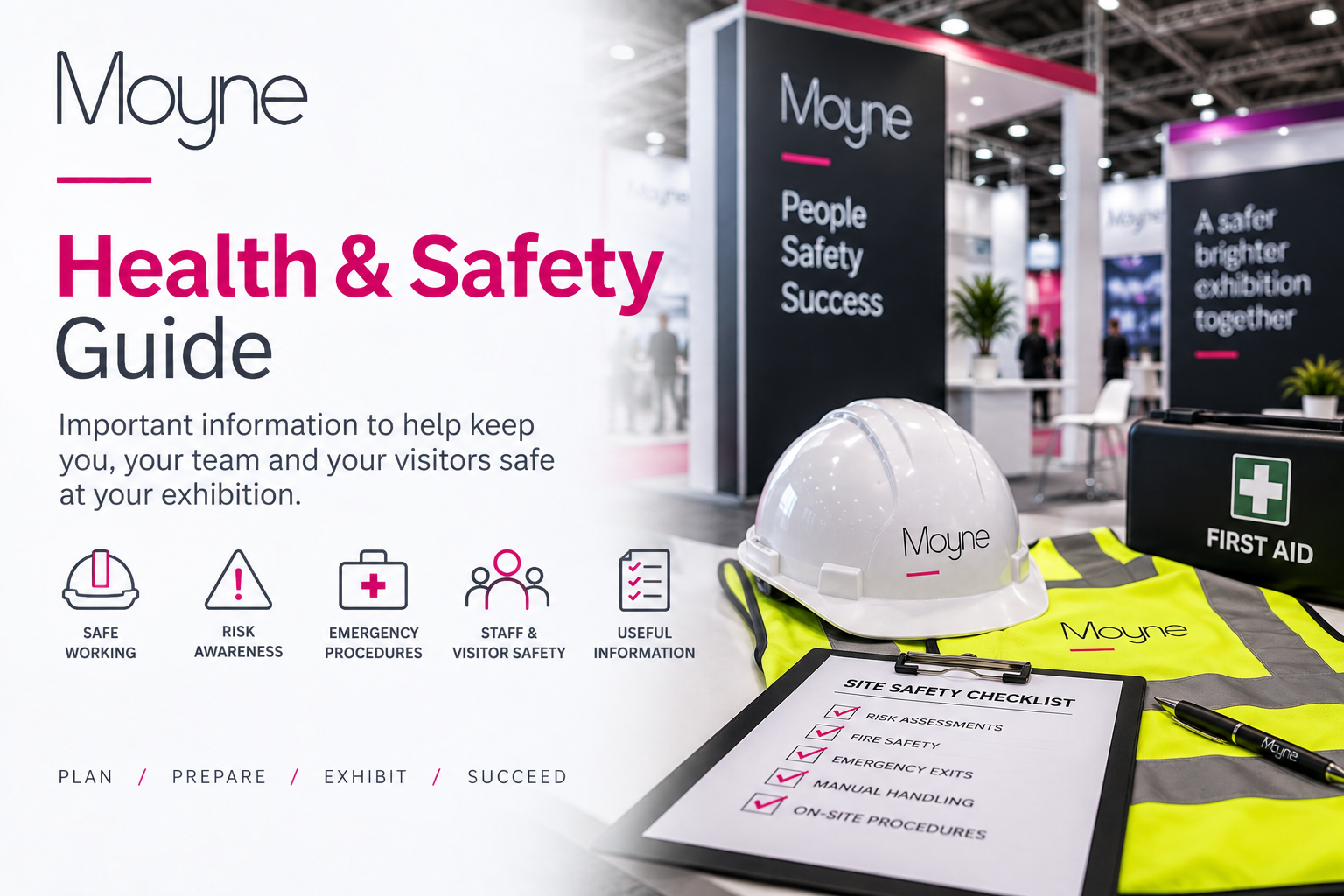
Health & Safety Guide

Plan, build and operate your exhibition stand safely.

Every exhibitor has a responsibility to help maintain a safe working environment during build-up, exhibition opening hours and breakdown.

This practical guide explains common exhibition health and safety considerations, including stand planning, manual handling, electrical equipment, flooring, furniture, AV equipment, fire safety, housekeeping and emergency procedures.

This page provides general guidance only. Venue, organiser and event-specific health and safety requirements must always be followed. Review your exhibition dashboard, exhibitor manual and contractor information before arriving onsite.
EXHIBITOR ZONE

Plan Ahead

Good preparation reduces risks during deliveries, installation, operation and breakdown.

Protect Your Team

Make sure employees, contractors and temporary staff understand safe working practices.

Follow Venue Rules

Always comply with organiser, venue, contractor and event-specific safety requirements.

Health & Safety Starts Before The Exhibition

Safe exhibitions begin with careful planning.

Consider health and safety while planning every part of the stand, including:

  • Stand dimensions and open sides
  • Visitor routes and access
  • Furniture positions
  • Electrical sockets and lighting
  • Flooring and cable routes
  • Televisions and AV equipment
  • Graphics and display structures
  • Deliveries and manual handling
  • Storage areas
  • Demonstration equipment
  • Build-up and breakdown arrangements
  • Contractor responsibilities

Use the Stand Planning Guide to create a clear layout before ordering services.

Coordinate All Stand Services

One stand element can affect several others.

Plan related services together rather than treating each order separately.

For example:

  • Electrical sockets should match equipment positions
  • Flooring should accommodate safe cable routes
  • Furniture should not obstruct entrances
  • Screens should use secure mounting systems
  • Storage should not block electrical equipment
  • Deliveries should match available handling arrangements
  • Graphics should not cover safety signs or equipment

Review the Electrical Guidance, Flooring Guide, TV & AV Guide and Deliveries & Collections Guide while completing the stand plan.

Who Is Responsible For Exhibition Safety?

Safety depends on cooperation between everyone involved.

The Exhibitor

The exhibitor should plan the stand responsibly, provide accurate information, brief staff, manage exhibitor-owned equipment and comply with event rules.

The Organiser

The organiser provides event-specific rules, access arrangements, deadlines, operational information and instructions for exhibitors and contractors.

The Venue

The venue manages site-specific procedures, emergency arrangements, access rules, loading areas, fire safety systems and building facilities.

Contractors & Suppliers

Contractors should work safely, use appropriate equipment, provide competent personnel and follow organiser and venue procedures.

Stand Staff

Stand staff should follow instructions, report hazards, keep the stand tidy and avoid interfering with installed services or safety equipment.

Moyne

Moyne provides the ordered stand services and practical guidance relating to the products, installations and services supplied for the exhibition.

How To Prepare A Safe Exhibition Stand

Follow these four steps before the exhibition opens.

1. Plan The Stand Safely

Create a layout that maintains access, clear walkways, safe equipment positions and suitable visitor flow.

2. Prepare Equipment & Staff

Check exhibitor-owned equipment, arrange suitable handling and brief everyone attending the stand.

3. Work Safely During Build-Up

Follow venue instructions, wear required PPE and avoid creating hazards for other exhibitors or contractors.

4. Maintain Safety Throughout

Inspect the stand regularly, remove hazards promptly and report accidents, damage or unsafe conditions.

Common Exhibition Health & Safety Considerations

Review every relevant area while planning and operating the stand.

Requirements vary by exhibition, venue and stand type. Use these categories as a practical checklist and refer to the event-specific rules for full details.

Safe Stand Layout

Keep entrances, walkways, storage areas and equipment accessible.

Avoid placing furniture, displays or promotional materials where they could obstruct visitors or extend into gangways.

Manual Handling

Assess the size, shape and weight of items before moving them.

Use trolleys, team lifting or specialist handling equipment where appropriate.

Electrical Safety

Do not use damaged plugs, cables or electrical equipment.

Avoid overloading supplies or using unapproved adaptors. Read the Electrical Guidance before ordering power.

Working At Height

Use suitable access equipment and competent personnel for work above normal standing height.

Never stand on chairs, tables, boxes or unstable furniture.

Flooring Safety

Check flooring for loose edges, raised joints, damaged surfaces and trip hazards.

Plan cable routes and floor finishes using the Flooring Guide.

TV & AV Equipment

Screens, speakers and display equipment should use stable stands or suitable mounting systems.

Manage power and signal cables safely. See the TV & AV Guide.

Furniture Safety

Place furniture on stable surfaces and avoid narrowing entrances or walkways.

Heavy display cabinets and tall units should be positioned carefully. See the Furniture Guide.

Fire Safety

Do not obstruct fire exits, extinguishers, alarm points or emergency signage.

Use suitable materials and follow all venue requirements relating to flammability, heat and ignition sources.

Housekeeping & Storage

Remove packaging, waste and unused materials promptly.

Do not overload cupboards or store items around electrical equipment, heaters, access panels or emergency routes.

Personal Protective Equipment

Build-up and breakdown may require safety footwear, high-visibility clothing, gloves, eye protection or other PPE.

Check the event-specific requirements before entering the hall.

Emergency Procedures

Make sure stand staff understand alarm signals, emergency exits, assembly points, first-aid arrangements and incident-reporting procedures.

Children During Build-Up

Children are commonly restricted from exhibition halls during build-up and breakdown.

Check the organiser and venue rules before travelling with anyone under the permitted age.

Plan Your Stand Safely

Identify access routes, equipment positions and possible hazards before build-up.

Show furniture, electrical points, AV equipment, storage, floor features and visitor routes clearly on your layout.

Review the completed plan before submitting orders or sending equipment to the venue.

Manual Handling Guidance

Assess items before attempting to move them.

Before lifting or carrying an item, consider:

  • Its weight
  • Its size and shape
  • Whether the load can be held securely
  • The distance it must be moved
  • Doorways, ramps and floor conditions
  • Whether the route is clear
  • Whether another person is needed
  • Whether a trolley or mechanical aid is available

Avoid sudden twisting, stretching or lifting from an unstable position.

Do not attempt to move loads that are beyond your ability or available equipment.

Handling Heavy Or Awkward Items

Arrange suitable equipment and assistance in advance.

Heavy or difficult items may require:

  • Team lifting
  • A platform trolley
  • A pallet truck
  • A forklift
  • A lifting contractor
  • Additional personnel
  • Protective floor coverings
  • A controlled unloading area

Book handling services before arrival where required.

The Deliveries & Collections Guide explains how to coordinate transport and onsite handling.

Working Safely During Build-Up

Build-up is an active working environment.

Follow Access Instructions

Enter through the correct access point and comply with badge, contractor pass and PPE requirements.

Watch For Moving Vehicles

Be alert around loading areas, forklifts, delivery vehicles, lifting equipment and moving loads.

Use Suitable Tools

Use appropriate, well-maintained tools and equipment for each task. Do not improvise with unsuitable furniture or packaging.

Control Your Work Area

Keep materials, tools and packaging within the stand boundary without obstructing gangways or neighbouring stands.

Report Damage Promptly

Report damaged stand components, flooring, sockets, furniture or equipment before attempting to use them.

Do Not Rush

Allow enough time for unloading, installation, checks and corrections before the published build-up deadline.

Safety During Exhibition Opening Hours

Inspect and maintain the stand throughout the event.

During opening hours:

  • Keep entrances and gangways clear
  • Remove bags and personal items from visitor routes
  • Clean spillages immediately
  • Monitor loose flooring and cables
  • Check that furniture remains stable
  • Keep storage cupboards closed
  • Monitor powered equipment
  • Keep displays and literature within the stand boundary
  • Do not obstruct safety equipment
  • Report damage or hazards promptly

Complete a quick visual inspection before visitors enter each morning.

Demonstrations & Working Equipment

Plan how equipment will be operated around visitors.

Where the stand includes machinery, demonstrations, moving equipment, heat, liquids or specialist products, consider:

  • Operator competence
  • Visitor separation
  • Guarding and barriers
  • Emergency stopping
  • Electrical requirements
  • Noise levels
  • Heat and ventilation
  • Spillage control
  • Product-specific restrictions
  • Organiser approval

Provide complete details to the organiser where advance approval is required.

Safe Exhibition Breakdown

Do not begin dismantling before the event closes.

Wait for the official breakdown announcement and follow organiser instructions.

During breakdown:

  • Keep visitor routes clear until the hall is closed
  • Use required PPE
  • Pack goods within the stand boundary
  • Separate hired and exhibitor-owned equipment
  • Use suitable lifting methods
  • Keep access to emergency exits clear
  • Control loose packaging and waste
  • Wait for authorised vehicle access
  • Keep valuable items attended
  • Follow the final removal deadline

Collections & Vehicle Access

Allow the venue to manage loading areas safely.

Breakdown vehicle access may not begin immediately after the public leaves.

Before the final day:

  • Book return transport
  • Confirm the permitted collection time
  • Prepare return labels
  • Arrange loading assistance
  • Confirm the driver contact details
  • Decide who will remain onsite
  • Prepare suitable return packaging

Review the Venue Information Guide and Deliveries & Collections Guide before arranging collections.

Exhibition Safety Checklist

Review the stand before the exhibition opens.

Stand Layout Checked

Entrances, visitor routes, storage areas and equipment remain accessible.

Furniture Secure

Tables, chairs, counters, cabinets and display units are stable and correctly positioned.

Electrics Checked

Sockets, lighting, cables and exhibitor-owned equipment appear safe and undamaged.

AV Equipment Secure

Screens, speakers, kiosks and mounting systems are stable and cables are controlled.

Flooring Safe

Floor coverings, edges, transitions and cable routes do not create obvious trip hazards.

Fire Routes Clear

Fire exits, extinguishers, alarm points and emergency signs remain accessible.

Deliveries Completed

Packaging, pallets, trolleys and unused materials have been removed or stored correctly.

Staff Briefed

Everyone understands emergency procedures, stand rules and how to report a hazard or incident.

Check The Requirements For Your Exhibition

Event-specific information takes priority over this general guide.

Select your exhibition to access venue instructions, build-up requirements, exhibitor documents, deadlines and available health and safety information.

Frequently Asked Questions

This depends on the stand type, exhibition rules and work involved. Exhibitors and contractors must follow organiser and venue requirements and use competent people, suitable equipment and safe working practices.

Many venues require safety footwear and high-visibility clothing during build-up and breakdown. Additional PPE may be required for particular tasks. Check the event-specific requirements before arrival.

Children are commonly prohibited or restricted during build-up and breakdown because the hall is an active working environment. Check the organiser and venue age restrictions before travelling.

Report accidents, near misses, damage and unsafe conditions immediately using the event-specific organiser, venue or contractor reporting process. Emergency issues should be reported without delay.

This depends on the exhibition requirements and the condition and suitability of the equipment. Exhibitor-owned electrical items should be safe, undamaged and compatible with the available supply. Check the Electrical Guidance and event rules.

Work at height should use suitable equipment and competent personnel. Do not use chairs, tables or boxes as substitutes. Venue or organiser rules may restrict particular access equipment or tasks.

Machinery and specialist demonstrations may require advance approval, risk information, guarding, suitable power, competent operators and additional safety controls. Submit complete details to the organiser before the stated deadline.

Packaging should only be stored in an approved area without obstructing access, electrical equipment, fire routes or neighbouring stands. Empty-case storage may need to be arranged separately.

Risk assessment requirements vary according to the exhibition, stand type, activities and equipment involved. Review the exhibitor manual and provide any requested documentation before the relevant deadline.

Need Help With Your Stand Arrangements?

Contact the Moyne team if you need practical guidance relating to the stand products, installations or services supplied for your exhibition.

Please include your exhibition name, company name, stand number and details of the product, installation or stand arrangement you are asking about.

+44 (0)208 997 8596
info@moyne.co.uk